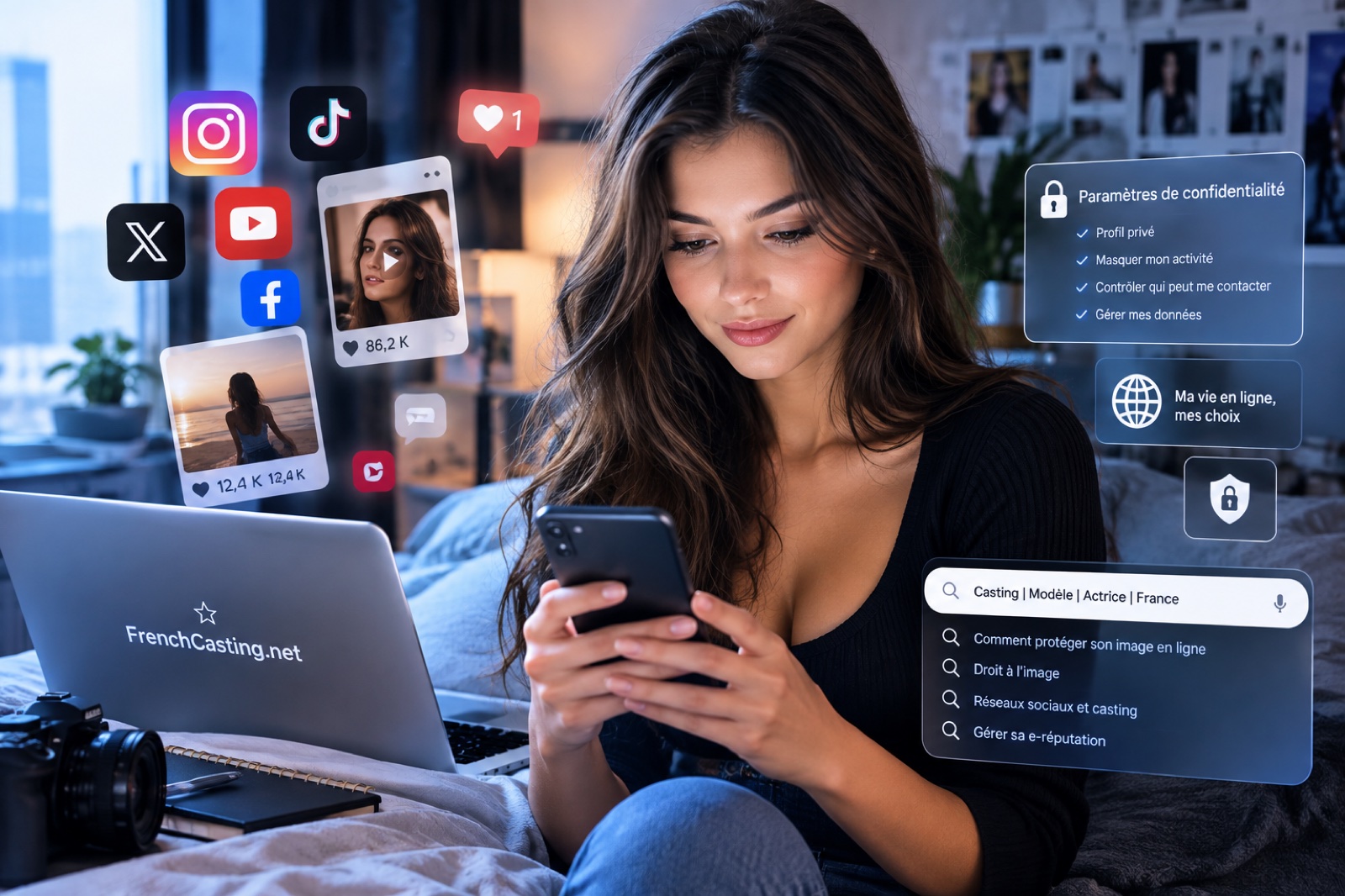
Even before your first application, your digital life goes ahead of you. What you post, what others post about you, what remains online years later: all of this is part of your image, just as much as a portrait or an audition. In adult production more than anywhere else, keeping control of that image is not optional — it is the foundation. Pseudonym, social media, privacy, reputation, content distribution: here are the five habits to adopt before you get started.
A pseudonym, your first boundary
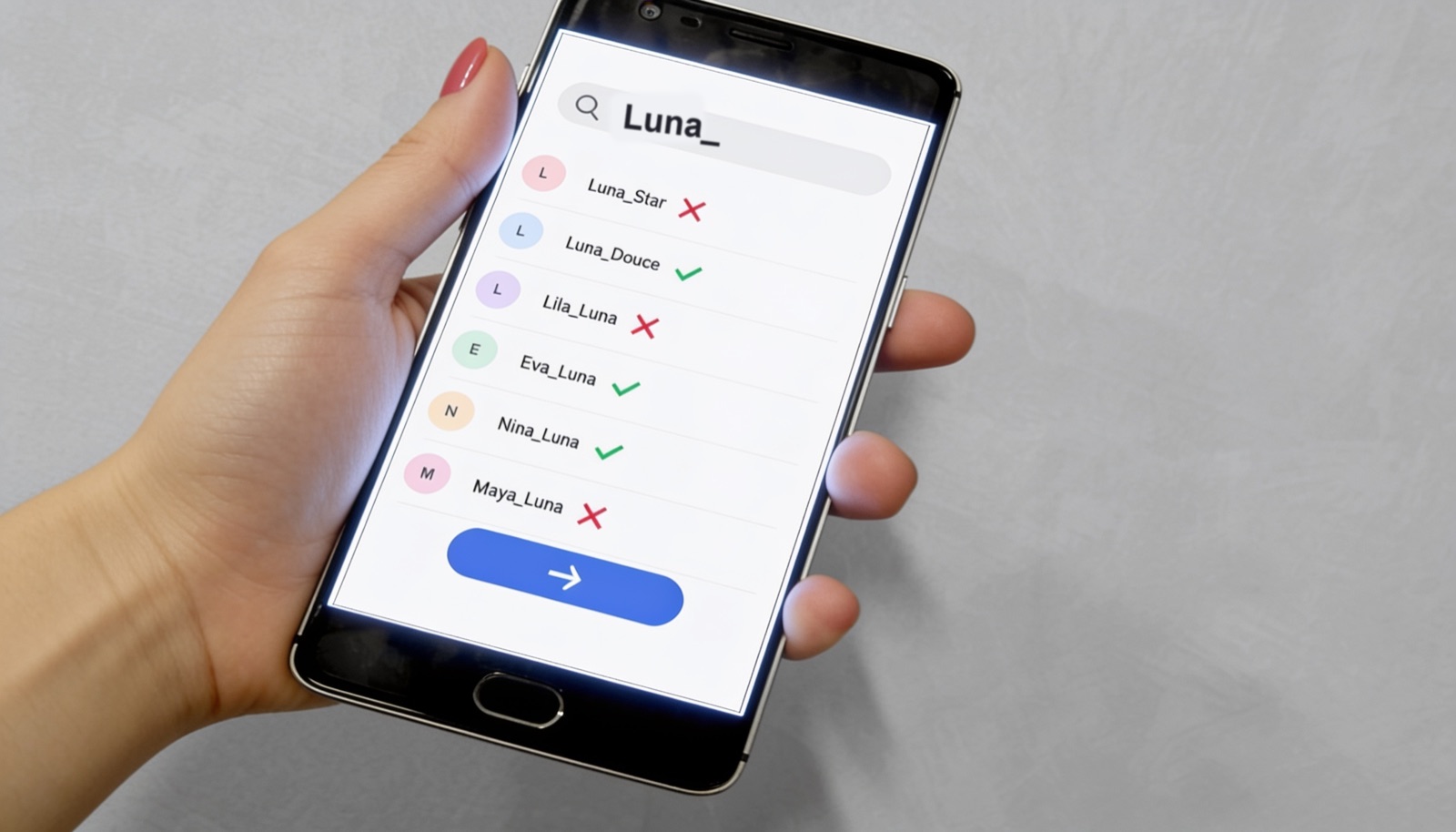
This is rule number one, and it allows no exception: your pseudonym must never overlap with your legal identity. No variation of your first name, your city or your date of birth, and no photo taken from your personal accounts. Create a dedicated email address, used only for your professional activity, and make sure your stage name is not linked to anything else: type it into a search engine, run a reverse image search on the photos you intend to use. A good pseudonym is consistent everywhere — the same name on the agency's site, on your professional profiles, in your messages — yet completely watertight from the rest of your life.
Social media: two lives that never cross
If you run accounts linked to your activity, they must be kept separate from your personal ones: other usernames, other email addresses, no uncontrolled mutual friends. Lock down your privacy settings, turn off the geolocation of your posts, and never reveal anything identifiable by mistake — a reflection in a mirror, a number plate, a recognisable background. Never announce in advance where you will be, and when. And remember that a story is a publication: it can be captured in one second, and it will remain.
Privacy: who sees what?
Your application contains sensitive information — photos, measurements, sometimes identity documents. It must only travel through official, verified channels. At FrenchCasting, everything goes through the contact form and our privacy page explains exactly how your data is handled. The principle applies everywhere: never send sensitive documents to someone who has not verified themselves, and identity verification works both ways. A serious production will never ask you to “prove your motivation” with intimate photos outside a contractual framework: such a request is a red flag, not a step in the process.
Digital reputation: think five years ahead
The internet does not forget. A screenshot, a repost, an old username brought back to light: whatever circulates keeps circulating for a long time. The right to be forgotten exists (the GDPR allows you to ask for certain pages to be de-referenced), but it is slow, partial and never guaranteed. The best strategy remains prevention: assume that everything you put online can be seen by a relative, an employer or a neighbour. Before publishing anything — even “temporary” — ask yourself one single question: am I happy for this image to represent me in five years' time?
Content distribution: knowing what will become public
Last point, and not the least: a production is meant to be distributed. That is its very purpose. Before any shoot, you must know precisely what will be published, where, in what format and under which pseudonym — and these details must appear in black and white in your contract. Once content has been published, copies can circulate beyond anyone's control: it is a reality of the industry to accept from the start, not to discover afterwards. Ask all your questions before signing, never after. Our article on how to become an adult film model explains what is negotiable and what must be clear from the very first exchange.
Keeping control of your digital image is not paranoia: it is professionalism. The models who work best and longest are those who set these rules from day one. And if you would like to apply within a framework where confidentiality is written into the contract and every question gets an answer, our casting process is described transparently, from the first message to the shoot.